W.T. Melon
A daily bit of classroom info--a Bit Blog--for K-5 students written by a former Apple Island teacher, who now lives above the classroom at the end of the hall at W.T. Melon Elementary School.
About Me
Saturday, April 30, 2005
George never followed directions. So when a man named Wolfgang on a video teaches him how to play the world's catchiest tune on his recorder, how could George resist listening to it, although Wolfgang warned him to only play it with his ears plugged or the result would be disasterous.
Friday, April 29, 2005
X from Alphabet Poems
Behold the excellent X,
It expects no excuses.
Dictionaries give it one page.
But it has many uses.
In math it means multiply.
It fills squares in Tic-Tac-Toe.
Romans counted it as ten.
It’s a kiss when with an O.
On bottles it says don’t drink.
Coaches draw it for a play.
And when written before mas,
It becomes a holiday.
On treasure maps it marks spots.
With Brand X you can not tell.
Sign on the line beside it.
It’s jumbo before an L.
It names a generation,
Or sports that daredevils do,
It’s the last name of Malcolm,
And a ray that sees straight through.
So if math problems stump you,
Don’t sit at your desk and pout.
Use this exciting letter,
And X the whole thing out.
Thursday, April 28, 2005
Princess Stew
This wonderful picture by Omar Rayyan is from my story Princess Stew printed in SPIDER magazine August 2002.
Wednesday, April 27, 2005
Today's Playgrounds
You see pictures of old playgrounds where children are having loads of fun on a school playground swinging high on swings, spinning wildly around on carousels, teetering up and down on a see-saws, doing skin-the cats off high bars, and zipping down tall, metal slides all on top of hard asphalt. Well, wonderful, as you know, those days are long over. Those wild, exciting, and bruising playground have been replaced with the “safety” playgrounds--monkey bars that are only a short stretch above a soft, rubber mat, wide plastic slides, and climbing structures that don't allow much climbing. Nothing moves very fast; swings don't swing very high; teeter-totters are gone, as are merry-go-rounds. I wonder, wonderful ones, if playgrounds are not fun grounds to play on anymore. I hope there are still trees somewhere to climb and grapevines to swing on.
Tuesday, April 26, 2005
Monday, April 25, 2005
Wrapping My School
Christo, the artist, wraps buildings,
And I thought that’s real cool,
So I did some artwork also,
Today I wrapped my school.
With big spools of poster paper,
Red, white, green, black, and blue,
Running round I unraveled rolls,
And taped them when all through.
Wrapping the gym was the hard part,
Because it stood so tall.
But I put on rock climbing gear,
And repelled down each wall.
A red library, white lunchroom,
The office I wrapped green.
At last my art was finished when,
No inch of school was seen.
Soon inside my package bells rang.
And I heard teacher shout.
“Christine unwrap this school at once!
And let the students out!”
And I thought that’s real cool,
So I did some artwork also,
Today I wrapped my school.
With big spools of poster paper,
Red, white, green, black, and blue,
Running round I unraveled rolls,
And taped them when all through.
Wrapping the gym was the hard part,
Because it stood so tall.
But I put on rock climbing gear,
And repelled down each wall.
A red library, white lunchroom,
The office I wrapped green.
At last my art was finished when,
No inch of school was seen.
Soon inside my package bells rang.
And I heard teacher shout.
“Christine unwrap this school at once!
And let the students out!”
Sunday, April 24, 2005
Torture Chamber
In Prince Apple's Office Palace on Apple Island there is a room that holds all the instrument of punishments teacher have used to discipline children--the hickory stick, the dunce stool, the blackboard for writing lines, a ruler, the room is loaded.
Saturday, April 23, 2005
Friday, April 22, 2005
The Classroom Door
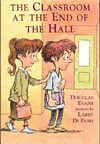
Wonderful ones! Here's the door to the classroom at the end of the hall. Here's the door the third-graders walk through each morning to begin the school day. In the winter I hear their boots go Tramp! Tramp! Tramp! as their boots march up the hallway and through the door. In spring I hear Pat! Pat! Pat! for they are wearing sneakers. Slam! sometimes I hear the door do, if someone is sent to the office. Bang! sometimes the door goes when swinging open at recess time.
Thursday, April 21, 2005
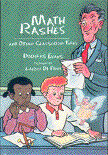
Math Rashes Part 4
At this point a scream came from the fourth row. “There are spots on my arms,” Morgan called out. “No, they’re not spots; they’re plus and minus signs! My arms are covered with plus and minus signs!” She began scratching the red math symbols, that covered her hands and arms. The odd rash quickly spread over her neck and face.
“Spots are on my arms too,” Hari suddenly called out. “They’re numbers! Hic! Hic! Hic! Miss Givings, I’m covered with the numbers zero to nine!”
Soon afterward Kate announced, “Yikes! Now I have red spots on my arms! They’re times and divisions signs! And numbers! Yikes! Entire math problems are breaking out all over me!”
Miss Givings sat on her desktop. “How odd! Math Rashes!” she exclaimed. “During student teaching I learned what to do about bee stings, mosquito bites, and poison ivy bumps, but never about Math Rashes.”
By now most of the third-graders had slumped in their seats, exhausted, heads still bouncing with hiccups. Many scratched the mysterious rashes that had broken out on their arms and faces.
The substitutes walked up and down the aisles, examining her students as a doctor might her patients. “Hiccups and Math Rashes. Hiccups and Math Rashes,” she said over and over. “This can only mean one thing--an allergy. Kids, I believe you’ve had an allergic reaction to something, something in this classroom. But what could it be? You haven’t eaten anything. You haven’t touched anything. How can we cure this allergy and get back to our schoolwork?”
Hic! Hic! Hic! Hic!
Mimi’s hand went up. “Miss Givings, I think the allergy has something to do with schoolwork,” she called out. “Whenever you mention it, I hiccup more.”
“And my Math Rash itches worse,” said Andrew, scratching the fractions on the back of his neck.
Miss Givings raised a hand to her chin. “Yes, yes, I see what you mean.” She decided to do an experiment and suddenly announced, “Time for a pop math quiz on, kids!”
Hic! Hic! Hic! More hiccups and scratching.
“Yes, that explains it,” the substitute said. “That’s what’s causing your hiccups and Math Rashes, all right. I believe this entire class has become allergic to, of all things--schoolwork! Yes, this is a Schoolwork Allergy, and I must take the blame for it. I’ve given you an overdose of schoolwork this morning, haven’t I? You’ve had too much reading, too much writing, and especially too much arithmetic. So you all broke out in Math Rashes. Isn’t that right? Oh, there’s so much about teaching I still need to learn, kids, but I think I know a cure for this allergy.” Here Miss Givings looked out the window again. “Your next assignment, is to go outside in the snow and play. Now, no arguing about it. No more schoolwork for now. Put on your wraps at once and march straight to the playground.”
Within minutes, the third-graders were outside in the glorious snow. Soon the playground resembled the cratered surface of the moon. They built snow forts and supplied them with snowballs. They dropped on their backs to make snow angels and stomped around the soccer field, writing their names in giant letters.
Miss Givings, wrapped in a long red coat, red beret, and red scarf, stood by the jungle gym. She packed a snowball, and started rolling it toward the center of the playground. When it was the size of a globe, two third-graders helped push it until it stood taller than they were. Now the entire class joined in. They rolled another boulder slightly smaller than the first and another smaller still. Soon they surrounded the tallest snowman W. T. Melon Elementary School had ever seen. It wore a red scarf and red beret.
“Is everyone having a good time, kids?” the substitute called out. “This play should cure your Schoolwork Allergy. Isn’t it fun out here? I think I’ll enjoy being a teacher very much. Does everyone feel better now?”
The class answered with whoops and cheers. And not once, during the entire recess time, did anyone hear a single hiccup or scratch a single Math Rash.
“Spots are on my arms too,” Hari suddenly called out. “They’re numbers! Hic! Hic! Hic! Miss Givings, I’m covered with the numbers zero to nine!”
Soon afterward Kate announced, “Yikes! Now I have red spots on my arms! They’re times and divisions signs! And numbers! Yikes! Entire math problems are breaking out all over me!”
Miss Givings sat on her desktop. “How odd! Math Rashes!” she exclaimed. “During student teaching I learned what to do about bee stings, mosquito bites, and poison ivy bumps, but never about Math Rashes.”
By now most of the third-graders had slumped in their seats, exhausted, heads still bouncing with hiccups. Many scratched the mysterious rashes that had broken out on their arms and faces.
The substitutes walked up and down the aisles, examining her students as a doctor might her patients. “Hiccups and Math Rashes. Hiccups and Math Rashes,” she said over and over. “This can only mean one thing--an allergy. Kids, I believe you’ve had an allergic reaction to something, something in this classroom. But what could it be? You haven’t eaten anything. You haven’t touched anything. How can we cure this allergy and get back to our schoolwork?”
Hic! Hic! Hic! Hic!
Mimi’s hand went up. “Miss Givings, I think the allergy has something to do with schoolwork,” she called out. “Whenever you mention it, I hiccup more.”
“And my Math Rash itches worse,” said Andrew, scratching the fractions on the back of his neck.
Miss Givings raised a hand to her chin. “Yes, yes, I see what you mean.” She decided to do an experiment and suddenly announced, “Time for a pop math quiz on, kids!”
Hic! Hic! Hic! More hiccups and scratching.
“Yes, that explains it,” the substitute said. “That’s what’s causing your hiccups and Math Rashes, all right. I believe this entire class has become allergic to, of all things--schoolwork! Yes, this is a Schoolwork Allergy, and I must take the blame for it. I’ve given you an overdose of schoolwork this morning, haven’t I? You’ve had too much reading, too much writing, and especially too much arithmetic. So you all broke out in Math Rashes. Isn’t that right? Oh, there’s so much about teaching I still need to learn, kids, but I think I know a cure for this allergy.” Here Miss Givings looked out the window again. “Your next assignment, is to go outside in the snow and play. Now, no arguing about it. No more schoolwork for now. Put on your wraps at once and march straight to the playground.”
Within minutes, the third-graders were outside in the glorious snow. Soon the playground resembled the cratered surface of the moon. They built snow forts and supplied them with snowballs. They dropped on their backs to make snow angels and stomped around the soccer field, writing their names in giant letters.
Miss Givings, wrapped in a long red coat, red beret, and red scarf, stood by the jungle gym. She packed a snowball, and started rolling it toward the center of the playground. When it was the size of a globe, two third-graders helped push it until it stood taller than they were. Now the entire class joined in. They rolled another boulder slightly smaller than the first and another smaller still. Soon they surrounded the tallest snowman W. T. Melon Elementary School had ever seen. It wore a red scarf and red beret.
“Is everyone having a good time, kids?” the substitute called out. “This play should cure your Schoolwork Allergy. Isn’t it fun out here? I think I’ll enjoy being a teacher very much. Does everyone feel better now?”
The class answered with whoops and cheers. And not once, during the entire recess time, did anyone hear a single hiccup or scratch a single Math Rash.
Wednesday, April 20, 2005
The Third-Grade Class: Kenneth
Kenneth was a poor reader. He never had much interest in reading. Then one day he found a purple book on the reading shelf. He became very interested in reading this purple reader, because everything he read about in the book began ahppening to him. The purple reader was telling his future!
Tuesday, April 19, 2005
Math Rashes Part 3
The substitute checked the seating chart. “George, go to the sink and get a drink of water. Swallow nine times. That’s a hiccup cure I learned while student teaching.”
George walked to the sink. He slurped some water, gulping once, twice...three, four, five, six, seven, eight...nine times. Hic! Hic! Hic! But he was still hiccuping.
Now Kate, who sat behind George, started to hiccup as well. She held a hand to her lips and looked toward the sub.
“Get a drink, Kate,” Miss Givings said. “And remember, swallow nine times.”
Kate slurped, gulped, and counted as George had done. Yet she too, Hic! Hic! Hic!, continued to hiccup.
The substitute stopped passing out papers. “How odd,” she said. “That hiccup cure has never failed before. Are you sure you both swallowed nine times--not eight or ten?”
George and Kate nodded and hiccuped some more.
At this point Hic! Hic! Hic! erupted from Gabrielle in the fourth row, and Hic! Hic! Hic! came from Danny sitting catty-corner from her.
Mimi’s hand flew into the air. “Miss Givings, whenever I get the hiccups, my mom tells me to told my breath and count to one-hundred.”
George, Kate, Gabrielle, Danny, and Morgan, who was now hiccuping, sucked in some air and counted. But, Hic! Hic! Hic!, this cure worked no better.
“Miss Givings, I read that you should breathe into a paper bag,” Hari suggested. “Don’t use a plastic bag. Only paper, in and out, in and out.”
By now, five more third-graders had the hiccups. They each found a paper lunch bag in the coat closet and began blowing into them.
Meanwhile, Richard sneaked up behind two hiccupers. “Boo!” he shouted. “Boo! Boo!”
They jumped an inch.
“Did I spook you? Did I?” Richard asked. “Scaring people always makes hiccups go away.” Then he crept around the classroom startling anyone he could.
Miss Givings leaned against the teacher’s desk, shaking her head. “How odd. The hiccups seem to be spreading around the room,” she said. “If I didn’t know better I’d say they were contagious. What can I do? I never learned about contagious hiccups in teacher’s college.”
Joey in the first row called out, “I saw a sure cure for hiccups on TV, Miss Givings. They should hop up and down, and twirl at the same time.”
Andrew disagreed. “The newspaper said that the best way to get rid of hiccups is to stand on your head.”
While some third graders hopped and twirled, others did headstands. Some continued to gulp water and others held their breaths. Yet, despite all these cures, every student in the classroom at the end of the hall soon had the hiccups.
Hic! Hic! Hic! Hic! The classroom sounded like popcorn popping in a pan.
Danny held his middle. “I’ve been hiccuping so much my gut aches,” he complained.
Morgan flopped into her chair. “I don’t know what’s more exhausting, hiccuping or the hiccup cures.”
The substitute checked the lesson plan book. “But you kids must stop hiccuping,” she said. “We still have stories to write. We must do our vocabulary, social studies, S.S.R., and read our Weekly Readers.”
Hic! Hic! Hic! Hic! The third-graders answered, louder than before.
At this point a scream came from the fourth row. “There are spots on my arms,” Morgan called out. “No, they’re not spots; they’re plus and minus signs! My arms are covered with plus and minus signs!” She began scratching the red math symbols, that covered her hands and arms. The odd rash quickly spread over her neck and face.
“Spots are on my arms too,” Hari suddenly called out. “They’re numbers! Hic! Hic! Hic! Miss Givings, I’m covered with the numbers zero to nine!”
Soon afterward Kate announced, “Yikes! Now I have red spots on my arms! They’re times and divisions signs! And numbers! Yikes! Entire math problems are breaking out all over me!”
Miss Givings sat on her desktop. “How odd! Math Rashes!” she exclaimed. “During student teaching I learned what to do about bee stings, mosquito bites, and poison ivy bumps, but never about Math Rashes.”
By now most of the third-graders had slumped in their seats, exhausted, heads still bouncing with hiccups. Many scratched the mysterious rashes that had broken out on their arms and faces.
The substitutes walked up and down the aisles, examining her students as a doctor might her patients. “Hiccups and Math Rashes. Hiccups and Math Rashes,” she said over and over. “This can only mean one thing--an allergy. Kids, I believe you’ve had an allergic reaction to something, something in this classroom. But what could it be? You haven’t eaten anything. You haven’t touched anything. How can we cure this allergy and get back to our schoolwork?”
Hic! Hic! Hic! Hic!
Mimi’s hand went up. “Miss Givings, I think the allergy has something to do with schoolwork,” she called out. “Whenever you mention it, I hiccup more.”
“And my Math Rash itches worse,” said Andrew, scratching the fractions on the back of his neck.
Miss Givings raised a hand to her chin. “Yes, yes, I see what you mean.” She decided to do an experiment and suddenly announced, “Time for a pop math quiz on, kids!”
Hic! Hic! Hic! More hiccups and scratching.
“Yes, that explains it,” the substitute said. “That’s what’s causing your hiccups and Math Rashes, all right. I believe this entire class has become allergic to, of all things--schoolwork! Yes, this is a Schoolwork Allergy, and I must take the blame for it. I’ve given you an overdose of schoolwork this morning, haven’t I? You’ve had too much reading, too much writing, and especially too much arithmetic. So you all broke out in Math Rashes. Isn’t that right? Oh, there’s so much about teaching I still need to learn, kids, but I think I know a cure for this allergy.” Here Miss Givings looked out the window again. “Your next assignment, is to go outside in the snow and play. Now, no arguing about it. No more schoolwork for now. Put on your wraps at once and march straight to the playground.”
Within minutes, the third-graders were outside in the glorious snow. Soon the playground resembled the cratered surface of the moon. They built snow forts and supplied them with snowballs. They dropped on their backs to make snow angels and stomped around the soccer field, writing their names in giant letters.
Miss Givings, wrapped in a long red coat, red beret, and red scarf, stood by the jungle gym. She packed a snowball, and started rolling it toward the center of the playground. When it was the size of a globe, two third-graders helped push it until it stood taller than they were. Now the entire class joined in. They rolled another boulder slightly smaller than the first and another smaller still. Soon they surrounded the tallest snowman W. T. Melon Elementary School had ever seen. It wore a red scarf and red beret.
“Is everyone having a good time, kids?” the substitute called out. “This play should cure your Schoolwork Allergy. Isn’t it fun out here? I think I’ll enjoy being a teacher very much. Does everyone feel better now?”
The class answered with whoops and cheers. And not once, during the entire recess time, did anyone hear a single hiccup or scratch a single Math Rash.
George walked to the sink. He slurped some water, gulping once, twice...three, four, five, six, seven, eight...nine times. Hic! Hic! Hic! But he was still hiccuping.
Now Kate, who sat behind George, started to hiccup as well. She held a hand to her lips and looked toward the sub.
“Get a drink, Kate,” Miss Givings said. “And remember, swallow nine times.”
Kate slurped, gulped, and counted as George had done. Yet she too, Hic! Hic! Hic!, continued to hiccup.
The substitute stopped passing out papers. “How odd,” she said. “That hiccup cure has never failed before. Are you sure you both swallowed nine times--not eight or ten?”
George and Kate nodded and hiccuped some more.
At this point Hic! Hic! Hic! erupted from Gabrielle in the fourth row, and Hic! Hic! Hic! came from Danny sitting catty-corner from her.
Mimi’s hand flew into the air. “Miss Givings, whenever I get the hiccups, my mom tells me to told my breath and count to one-hundred.”
George, Kate, Gabrielle, Danny, and Morgan, who was now hiccuping, sucked in some air and counted. But, Hic! Hic! Hic!, this cure worked no better.
“Miss Givings, I read that you should breathe into a paper bag,” Hari suggested. “Don’t use a plastic bag. Only paper, in and out, in and out.”
By now, five more third-graders had the hiccups. They each found a paper lunch bag in the coat closet and began blowing into them.
Meanwhile, Richard sneaked up behind two hiccupers. “Boo!” he shouted. “Boo! Boo!”
They jumped an inch.
“Did I spook you? Did I?” Richard asked. “Scaring people always makes hiccups go away.” Then he crept around the classroom startling anyone he could.
Miss Givings leaned against the teacher’s desk, shaking her head. “How odd. The hiccups seem to be spreading around the room,” she said. “If I didn’t know better I’d say they were contagious. What can I do? I never learned about contagious hiccups in teacher’s college.”
Joey in the first row called out, “I saw a sure cure for hiccups on TV, Miss Givings. They should hop up and down, and twirl at the same time.”
Andrew disagreed. “The newspaper said that the best way to get rid of hiccups is to stand on your head.”
While some third graders hopped and twirled, others did headstands. Some continued to gulp water and others held their breaths. Yet, despite all these cures, every student in the classroom at the end of the hall soon had the hiccups.
Hic! Hic! Hic! Hic! The classroom sounded like popcorn popping in a pan.
Danny held his middle. “I’ve been hiccuping so much my gut aches,” he complained.
Morgan flopped into her chair. “I don’t know what’s more exhausting, hiccuping or the hiccup cures.”
The substitute checked the lesson plan book. “But you kids must stop hiccuping,” she said. “We still have stories to write. We must do our vocabulary, social studies, S.S.R., and read our Weekly Readers.”
Hic! Hic! Hic! Hic! The third-graders answered, louder than before.
At this point a scream came from the fourth row. “There are spots on my arms,” Morgan called out. “No, they’re not spots; they’re plus and minus signs! My arms are covered with plus and minus signs!” She began scratching the red math symbols, that covered her hands and arms. The odd rash quickly spread over her neck and face.
“Spots are on my arms too,” Hari suddenly called out. “They’re numbers! Hic! Hic! Hic! Miss Givings, I’m covered with the numbers zero to nine!”
Soon afterward Kate announced, “Yikes! Now I have red spots on my arms! They’re times and divisions signs! And numbers! Yikes! Entire math problems are breaking out all over me!”
Miss Givings sat on her desktop. “How odd! Math Rashes!” she exclaimed. “During student teaching I learned what to do about bee stings, mosquito bites, and poison ivy bumps, but never about Math Rashes.”
By now most of the third-graders had slumped in their seats, exhausted, heads still bouncing with hiccups. Many scratched the mysterious rashes that had broken out on their arms and faces.
The substitutes walked up and down the aisles, examining her students as a doctor might her patients. “Hiccups and Math Rashes. Hiccups and Math Rashes,” she said over and over. “This can only mean one thing--an allergy. Kids, I believe you’ve had an allergic reaction to something, something in this classroom. But what could it be? You haven’t eaten anything. You haven’t touched anything. How can we cure this allergy and get back to our schoolwork?”
Hic! Hic! Hic! Hic!
Mimi’s hand went up. “Miss Givings, I think the allergy has something to do with schoolwork,” she called out. “Whenever you mention it, I hiccup more.”
“And my Math Rash itches worse,” said Andrew, scratching the fractions on the back of his neck.
Miss Givings raised a hand to her chin. “Yes, yes, I see what you mean.” She decided to do an experiment and suddenly announced, “Time for a pop math quiz on, kids!”
Hic! Hic! Hic! More hiccups and scratching.
“Yes, that explains it,” the substitute said. “That’s what’s causing your hiccups and Math Rashes, all right. I believe this entire class has become allergic to, of all things--schoolwork! Yes, this is a Schoolwork Allergy, and I must take the blame for it. I’ve given you an overdose of schoolwork this morning, haven’t I? You’ve had too much reading, too much writing, and especially too much arithmetic. So you all broke out in Math Rashes. Isn’t that right? Oh, there’s so much about teaching I still need to learn, kids, but I think I know a cure for this allergy.” Here Miss Givings looked out the window again. “Your next assignment, is to go outside in the snow and play. Now, no arguing about it. No more schoolwork for now. Put on your wraps at once and march straight to the playground.”
Within minutes, the third-graders were outside in the glorious snow. Soon the playground resembled the cratered surface of the moon. They built snow forts and supplied them with snowballs. They dropped on their backs to make snow angels and stomped around the soccer field, writing their names in giant letters.
Miss Givings, wrapped in a long red coat, red beret, and red scarf, stood by the jungle gym. She packed a snowball, and started rolling it toward the center of the playground. When it was the size of a globe, two third-graders helped push it until it stood taller than they were. Now the entire class joined in. They rolled another boulder slightly smaller than the first and another smaller still. Soon they surrounded the tallest snowman W. T. Melon Elementary School had ever seen. It wore a red scarf and red beret.
“Is everyone having a good time, kids?” the substitute called out. “This play should cure your Schoolwork Allergy. Isn’t it fun out here? I think I’ll enjoy being a teacher very much. Does everyone feel better now?”
The class answered with whoops and cheers. And not once, during the entire recess time, did anyone hear a single hiccup or scratch a single Math Rash.
Monday, April 18, 2005
Bad-News Whistle
The playground lady always has a silver whistle plugged in between her lips. The students at WT Melon Elementary School call it The Bad-News Whistle. Whenever they hear it--Tweeeeeeep!--that means they are about to hear some bad news. Tweeeeep! "Stop kicking the red balls," the playground lady shouts. Tweeeeep! "Don't climb up the slide! Tweeeeep! Tweeeeep! And then comes the worst bad news of all. "Recess is over! Time to go inside!" Nobody likes the Bad-News Whistle.
Sunday, April 17, 2005
Math Rashes Part 2
For the next half-hour the class plowed through twenty long subtraction problems with lots of crossing out and borrowing from the thousands place.
“My mom uses a calculator and credit card when she shops,” Morgan muttered.
“I’m going to be a soccer player when I grow up,” Danny grumbled. “Why do soccer players need to know math?”
All this time, the snow beckoned outside the window. Squirming in their seats, the class yearned to go outside and play. Mimi’s eyes wandered toward the playground, causing her to write her ones in the tens place. George studied the snowdrift under the windowsill, until he nearly fell from his chair.
“Classroom fever!” Danny grumbled. “I have classroom fever!”
After math, hope rose when Miss Givings turned toward the window. “Well, kids, doesn’t the snow outside look wonderful?” she said. “Think of all the fun you could have in the snow. You could go sledding, skiing, or snow boarding. You could build snowmen, snow tunnels, or snow forts.”
The third-graders sat on the edge of their seats, ready to spring to the coat closet.
But instead of releasing her students, the sub picked up some writing paper. “So this morning for creative writing we’ll write snow stories,” she said. “Your title should be Wonderful Snow. Now, kids, put on your thinking caps and begin to write. Have fun and let’s be creative.”
This was too much. At the moment the snow was not wonderful. Inches beyond the glass it was teasing the class, crisp, powdery and sparkling in the sunlight.
Mimi chewed on her pencil. Richard snarled, ready to call a student work-strike right there and then. Even Kate, the best writer in the class, couldn’t think of a kind word to write about snow.
The substitute strolled up the rows of desks, handing out paper. “Don’t forget to use the proper story heading,” she instructed. “And keep within the margins.”
As Miss Givings gave a writing sheet to George, the boy raised a hand to his mouth. Hic! Hic! Hic! he went. Hic! Hic! Hic! he went again. George had the hiccups.
“My mom uses a calculator and credit card when she shops,” Morgan muttered.
“I’m going to be a soccer player when I grow up,” Danny grumbled. “Why do soccer players need to know math?”
All this time, the snow beckoned outside the window. Squirming in their seats, the class yearned to go outside and play. Mimi’s eyes wandered toward the playground, causing her to write her ones in the tens place. George studied the snowdrift under the windowsill, until he nearly fell from his chair.
“Classroom fever!” Danny grumbled. “I have classroom fever!”
After math, hope rose when Miss Givings turned toward the window. “Well, kids, doesn’t the snow outside look wonderful?” she said. “Think of all the fun you could have in the snow. You could go sledding, skiing, or snow boarding. You could build snowmen, snow tunnels, or snow forts.”
The third-graders sat on the edge of their seats, ready to spring to the coat closet.
But instead of releasing her students, the sub picked up some writing paper. “So this morning for creative writing we’ll write snow stories,” she said. “Your title should be Wonderful Snow. Now, kids, put on your thinking caps and begin to write. Have fun and let’s be creative.”
This was too much. At the moment the snow was not wonderful. Inches beyond the glass it was teasing the class, crisp, powdery and sparkling in the sunlight.
Mimi chewed on her pencil. Richard snarled, ready to call a student work-strike right there and then. Even Kate, the best writer in the class, couldn’t think of a kind word to write about snow.
The substitute strolled up the rows of desks, handing out paper. “Don’t forget to use the proper story heading,” she instructed. “And keep within the margins.”
As Miss Givings gave a writing sheet to George, the boy raised a hand to his mouth. Hic! Hic! Hic! he went. Hic! Hic! Hic! he went again. George had the hiccups.
Saturday, April 16, 2005
The Third-Grade Class: Sarah
Sarah was a poor speller. She dreaded writing time since the teacher always criticized her speller. Sometimes she would use her worst handwriting so the teacher couldn't tell what words were misspelled. Then one day, the meal worm she had on her desk for a science experiment started to spell words for her. Sarah named the worm Bob and afterward began to enjoy writing more. Now she had her very own spellcheck, Bob, the mealworm.
Friday, April 15, 2005
Math Rashes Part 1
The playground was gone. Overnight it had disappeared under a foot of snow as white and flat as a birthday cake. Mr. Leeks, the custodian, was the only person on the playground before school started. He was shoveling the front sidewalk with a wide, curved shovel. The air was cold and snappy. The morning sun sprayed sparkles over the new white world.
At eight-thirty two yellow buses rolled into view. They stopped in front of the school, spraying slush across the sidewalk. The bus doors folded open, and out leaped whooping children, wrapped in knitted caps, thick coats, and rubber boots.
How inviting the snowy playground looked. How eager the students were to make snow forts, snow tunnels, and snow angels where only yesterday asphalt and grass had been.
The Playground Lady, however, stood between the buses. Her hands were stuffed into the pockets of a long, quilted coat. The Bad-News Whistle was stuffed between her lips.
Treeeeeeeeeep! the whistle blasted.
“The buses were late today, so head straight inside!” the Playground Lady roared. “Hurry! Hurry! The bell has already rung.”
The students plodded into the school. Tramp! Tramp! Tramp! One by one they veered off the hallway into their classrooms.
The third-graders headed to the end of the hall. They entered the room cautiously. After hanging up their wraps in the coat closet, they stepped timidly to their seats.
A new person stood by the blackboard. A young woman. A substitute. A teacher who didn’t know the class rules, the class routine, or even the class names.
The substitute was facing the blackboard. Her brown ponytail swayed, as she wrote her name in chalk. She wore a red bow in her hair. When she turned she smiled at the class with bright red lips.
“Good morning, kids. My name is Miss Givings,” the sub said. “Your teacher is sick today, and I’m so excited to be here. I just finished my student teaching, and this is my first job as a substitute. You kids are my very first class.”
Richard grinned; Danny groaned; Andrew began doodling, and Hari said a short prayer about no homework.
Miss Givings took attendance and checked the tall teacher’s lesson plan book. “Now kids, we have lots of schoolwork to do today. Just because you have a substitute doesn’t mean anything will be different. First, will you take out your reading books?”
Desktops opened. The class took one last longing look out the window before reading began.
The story was dull, with few pictures, little conversation, and no funny parts. Even worse, the substitute kept interrupting readers by asking, “What does that word mean? Who can explain that sentence? Why so you think that happen?”
Next came handwriting. “Today your teacher wants us to practice writing the hump letters,” said the substitute. “Cursive n’s, m’s, and h’s all have humps.”
So the third-graders wrote cursive m’s, n’s, and h’s over and over until their fingers ached.
Math followed. “Mathematics is a very important subject, kids,” Miss Givings said. “Think of all the math must you do if you go shopping. Think of the careers that will require math when you grow up.”
For the next half-hour the class plowed through twenty long subtraction problems with lots of crossing out and borrowing from the thousands place.
“My mom uses a calculator and credit card when she shops,” Morgan muttered.
“I’m going to be a soccer player when I grow up,” Danny grumbled. “Why do soccer players need to know math?”
All this time, the snow beckoned outside the window. Squirming in their seats, the class yearned to go outside and play. Mimi’s eyes wandered toward the playground, causing her to write her ones in the tens place. George studied the snowdrift under the windowsill, until he nearly fell from his chair.
“Classroom fever!” Danny grumbled. “I have classroom fever!”
After math, hope rose when Miss Givings turned toward the window. “Well, kids, doesn’t the snow outside look wonderful?” she said. “Think of all the fun you could have in the snow. You could go sledding, skiing, or snow boarding. You could build snowmen, snow tunnels, or snow forts.”
The third-graders sat on the edge of their seats, ready to spring to the coat closet.
But instead of releasing her students, the sub picked up some writing paper. “So this morning for creative writing we’ll write snow stories,” she said. “Your title should be Wonderful Snow. Now, kids, put on your thinking caps and begin to write. Have fun and let’s be creative.”
This was too much. At the moment the snow was not wonderful. Inches beyond the glass it was teasing the class, crisp, powdery and sparkling in the sunlight.
Mimi chewed on her pencil. Richard snarled, ready to call a student work-strike right there and then. Even Kate, the best writer in the class, couldn’t think of a kind word to write about snow.
The substitute strolled up the rows of desks, handing out paper. “Don’t forget to use the proper story heading,” she instructed. “And keep within the margins.”
As Miss Givings gave a writing sheet to George, the boy raised a hand to his mouth. Hic! Hic! Hic! he went. Hic! Hic! Hic! he went again. George had the hiccups.
At eight-thirty two yellow buses rolled into view. They stopped in front of the school, spraying slush across the sidewalk. The bus doors folded open, and out leaped whooping children, wrapped in knitted caps, thick coats, and rubber boots.
How inviting the snowy playground looked. How eager the students were to make snow forts, snow tunnels, and snow angels where only yesterday asphalt and grass had been.
The Playground Lady, however, stood between the buses. Her hands were stuffed into the pockets of a long, quilted coat. The Bad-News Whistle was stuffed between her lips.
Treeeeeeeeeep! the whistle blasted.
“The buses were late today, so head straight inside!” the Playground Lady roared. “Hurry! Hurry! The bell has already rung.”
The students plodded into the school. Tramp! Tramp! Tramp! One by one they veered off the hallway into their classrooms.
The third-graders headed to the end of the hall. They entered the room cautiously. After hanging up their wraps in the coat closet, they stepped timidly to their seats.
A new person stood by the blackboard. A young woman. A substitute. A teacher who didn’t know the class rules, the class routine, or even the class names.
The substitute was facing the blackboard. Her brown ponytail swayed, as she wrote her name in chalk. She wore a red bow in her hair. When she turned she smiled at the class with bright red lips.
“Good morning, kids. My name is Miss Givings,” the sub said. “Your teacher is sick today, and I’m so excited to be here. I just finished my student teaching, and this is my first job as a substitute. You kids are my very first class.”
Richard grinned; Danny groaned; Andrew began doodling, and Hari said a short prayer about no homework.
Miss Givings took attendance and checked the tall teacher’s lesson plan book. “Now kids, we have lots of schoolwork to do today. Just because you have a substitute doesn’t mean anything will be different. First, will you take out your reading books?”
Desktops opened. The class took one last longing look out the window before reading began.
The story was dull, with few pictures, little conversation, and no funny parts. Even worse, the substitute kept interrupting readers by asking, “What does that word mean? Who can explain that sentence? Why so you think that happen?”
Next came handwriting. “Today your teacher wants us to practice writing the hump letters,” said the substitute. “Cursive n’s, m’s, and h’s all have humps.”
So the third-graders wrote cursive m’s, n’s, and h’s over and over until their fingers ached.
Math followed. “Mathematics is a very important subject, kids,” Miss Givings said. “Think of all the math must you do if you go shopping. Think of the careers that will require math when you grow up.”
For the next half-hour the class plowed through twenty long subtraction problems with lots of crossing out and borrowing from the thousands place.
“My mom uses a calculator and credit card when she shops,” Morgan muttered.
“I’m going to be a soccer player when I grow up,” Danny grumbled. “Why do soccer players need to know math?”
All this time, the snow beckoned outside the window. Squirming in their seats, the class yearned to go outside and play. Mimi’s eyes wandered toward the playground, causing her to write her ones in the tens place. George studied the snowdrift under the windowsill, until he nearly fell from his chair.
“Classroom fever!” Danny grumbled. “I have classroom fever!”
After math, hope rose when Miss Givings turned toward the window. “Well, kids, doesn’t the snow outside look wonderful?” she said. “Think of all the fun you could have in the snow. You could go sledding, skiing, or snow boarding. You could build snowmen, snow tunnels, or snow forts.”
The third-graders sat on the edge of their seats, ready to spring to the coat closet.
But instead of releasing her students, the sub picked up some writing paper. “So this morning for creative writing we’ll write snow stories,” she said. “Your title should be Wonderful Snow. Now, kids, put on your thinking caps and begin to write. Have fun and let’s be creative.”
This was too much. At the moment the snow was not wonderful. Inches beyond the glass it was teasing the class, crisp, powdery and sparkling in the sunlight.
Mimi chewed on her pencil. Richard snarled, ready to call a student work-strike right there and then. Even Kate, the best writer in the class, couldn’t think of a kind word to write about snow.
The substitute strolled up the rows of desks, handing out paper. “Don’t forget to use the proper story heading,” she instructed. “And keep within the margins.”
As Miss Givings gave a writing sheet to George, the boy raised a hand to his mouth. Hic! Hic! Hic! he went. Hic! Hic! Hic! he went again. George had the hiccups.
Thursday, April 14, 2005
Wednesday, April 13, 2005
A Class Blog!
A class blog! Most students enjoy sharing their stories with others. The tall teacher down belwo in the classroom at the end of the hall often pins stories to the hallway bulletin board for others to read. If the class had a class blog, however, they could share their stories with the whole world. You can even put drawings, pictures, and voices on a blog. Often people who read the stories write comment back, so you might get a comment from the other side of the world. It's loads of fun, and blogs are easy to create! To get started click on star! *
Tuesday, April 12, 2005
The Third-Grade Class: Roger
Roger was the class pain-in-the neck. That's why the tall teacher often sent him outside to clean erasers. One time, though, Roger was banging the erasers together, causing great clouds of dust to fly into the air, when something remarkable happened. The Chalk-Dust Genie appeared in a chalk cloud to grant Roger three wishes. What better news could a mischievious boy such as Roger receive?
Monday, April 11, 2005
WT Melon Quote 3
"Home is where you can call the bed your own."
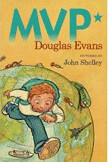
Adam Story, MVP*: the Magellan Voyage Project
Sunday, April 10, 2005
The Old Gray Chair
Leadbottom Billy Keester was the greatest chair riding champion in every great Western chair-riding rodeos. He could ride them all--barberchairs, time-out chairs, beach chairs, rocking chairs, you name it. But the chair that gave Leadbottom Billy Keester the greatest challenge, the chair that Billy could never stayed seated in for long, was the Old Gray Chair in the classroom at the end of the hall. This school year Zachary has that old wooden chair. Can Zachary keep from being thrown to the floor? Since Zachary often has trouble staying in his seat, this challenge might do him good. Yahooo!
Saturday, April 09, 2005
WT Melon Definition: STBT, the School Test Ban Treaty
STBT: the School Test Ban Treaty: (noun)
a treaty, proposed by ITS, the Underground Iowa Testing Site, to stop the rapid proliferation of tests in our nation's schools. Studies show that without this ban, soon students will be doing more testing during the school year than learning.
Friday, April 08, 2005
Sunshine State Young Readers Book Awards
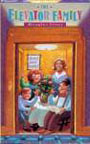
This week the wonderful children of Florida are voting on their favorite children's book, and I'm thrilled to have one of my books, The Elevator Family, nominated. As I sit here in my little room above the classroom at the end of the hall, I can watch the voting results coming in on my computer. How about that?
Thursday, April 07, 2005
WT Melon Definition: Operation Misteach
Operation Misteach: (noun)
The plot by the crabby teachers from Apple Island to take over the world's education by teaching wrong facts, incorrect spelling, and backward math to students in their classes. The plan was thwarted by Bradley Zimmerman when he was on Apple Island.
Wednesday, April 06, 2005
Tuesday, April 05, 2005
Hans’ New Clothes
Hans marched onto the playground,
For the Halloween parade.
Goblins and ghouls were lined up,
Kindergarten through fifth grade.
Music played and the line moved.
In his costume Hans felt proud,
But as he circled the field,
A hush fell across the crowd.
The parents gasped; the parents gawked.
All video cams turned off.
Small boys pointed; the girls laughed.
They could hear their teachers cough.
“Guess who I am?” Hans announced.
“Now who do you suppose?
I’m from a story my class read.
Do you like my fine new clothes?”
“The Emperor!” the kids cried.
“That’s the best costume ever!”
“From the Hans Anderson tale!”
“How creative! How clever!”
The parents in the crowd scowled.
Angry shouts blared everywhere.
“Someone put clothes on that kid!
That boy’s stark, buck-naked bare!”
For the Halloween parade.
Goblins and ghouls were lined up,
Kindergarten through fifth grade.
Music played and the line moved.
In his costume Hans felt proud,
But as he circled the field,
A hush fell across the crowd.
The parents gasped; the parents gawked.
All video cams turned off.
Small boys pointed; the girls laughed.
They could hear their teachers cough.
“Guess who I am?” Hans announced.
“Now who do you suppose?
I’m from a story my class read.
Do you like my fine new clothes?”
“The Emperor!” the kids cried.
“That’s the best costume ever!”
“From the Hans Anderson tale!”
“How creative! How clever!”
The parents in the crowd scowled.
Angry shouts blared everywhere.
“Someone put clothes on that kid!
That boy’s stark, buck-naked bare!”
Monday, April 04, 2005
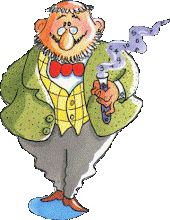
Walter Teach Melon
Wonderful Ones! This is the portrait of me that hangs in the hallway at WT Melon Elementary School. As you can see, I'm a bit portly gentleman who's losing some hair on the top. I'm carrying a book in one hand and an apple in the other, but sometimes I like to change those object, just to kid all the kids who pass me in the hall.
Sunday, April 03, 2005
Happy Birthday 200 Hans Christian Anderson
Hans Christian Anderson wrote what I believe is the most perfect children's story--The Emperor's New Clothes. I hope all you wonderful ones have read it. Here's why. First, I think it's a terrific plot, a great story--a vain emperor is tricked into thinking that he's wearing clothes that are invisiable to anyone who is unfit for his station. Since no one will admit that he is unfit for his job, including the Emperor, the Emperor ends up wearing no clothes at all in a parade. No one in the crowd says a thing until a young boy shouts out, "The Emperor is wearing no clothes."
Second, the story funny. I wonder if a story about a buck naked president parading down the streets of Washington would be published today. Although couldn't this story be appropriate for our current leaders?
Next, the story appeals to both children and adults alike. It's both a fine story and a meaningful story, celebrating the innocence of children and the conceit of adults. The Ugly Duckling, The Little Mermaid, The Steadfast Tin Soldier, thanks Hans Christian Anderson for writing such wonderful stories.
Happy Birthday!
Second, the story funny. I wonder if a story about a buck naked president parading down the streets of Washington would be published today. Although couldn't this story be appropriate for our current leaders?
Next, the story appeals to both children and adults alike. It's both a fine story and a meaningful story, celebrating the innocence of children and the conceit of adults. The Ugly Duckling, The Little Mermaid, The Steadfast Tin Soldier, thanks Hans Christian Anderson for writing such wonderful stories.
Happy Birthday!
Saturday, April 02, 2005
Apple Island
Apple Island is a peanut-shaped island far out in the Atlantic Ocean where all our countries teachers come from. Not too long ago the crab by teacher from the south who ate crab apples and the kind teachers in the north who ate red apples had a big arguement on the Grand Playground. This caused the Northern Teachers to leave and sail to America where they build the first S.C.H.O.O.L s in the fashion of their houses back on Apple Island.
Friday, April 01, 2005
Around the World Records
Fastest solo circumnavigation of the world sailing-72 day, 22 hours-Ellen MacArthur Feb 8, 2005
Fastest flight circumnavigation of the world- 31 hours 27 minutes 49 seconds-Michel Dupont and Claude Hetru August 15 to 16, 1995.
Fastest circumnavigation of the world by car – 69 days, 19 hours-Mohammed Salahuddin Choudhury Nov, 1989,
First walk around the world--4 years five months--David Kunst October 1974
Youngest person to travel around the world by land and sea transport only-39 days, 23 hours, 59 minutes, 59 seconds-Adam Story age 12, 4 months August 2004
Fastest flight circumnavigation of the world- 31 hours 27 minutes 49 seconds-Michel Dupont and Claude Hetru August 15 to 16, 1995.
Fastest circumnavigation of the world by car – 69 days, 19 hours-Mohammed Salahuddin Choudhury Nov, 1989,
First walk around the world--4 years five months--David Kunst October 1974
Youngest person to travel around the world by land and sea transport only-39 days, 23 hours, 59 minutes, 59 seconds-Adam Story age 12, 4 months August 2004